
Why Regular Full-Body Skin Exams Are Essential in Arizona
Living in Arizona means enjoying abundant sunshine year-round. While our sunny climate offers many benefits, it also puts us at higher risk for skin damage and skin cancer. At Arizona Skin Institute, we believe that full-body skin exams are one of the most effective tools for early detection and peace of mind.
But what exactly happens during these examinations? Many patients feel nervous simply because they don’t know what to expect. Today, we’re pulling back the curtain on the full-body skin exam process to help you feel more comfortable and prepared for this potentially life-saving appointment.
What Is a Full-Body Skin Exam?
A full-body skin exam is a comprehensive visual inspection of your skin from head to toe, performed by a dermatology provider. The purpose is to identify and evaluate any suspicious spots, moles, or skin changes that could indicate skin cancer or other skin conditions.
These exams are particularly important in Arizona, where our UV exposure is significantly higher than in many other parts of the country. Early detection of skin cancer dramatically increases treatment success rates, which is why we recommend regular screenings.
Before Your Appointment: How to Prepare
What to Bring and Know
Before coming in for your exam, it helps to:
- Make a note of any spots or moles that concern you
- Know your family history of skin cancer or melanoma
- Bring a list of medications you’re taking
- Have information about previous skin issues or biopsies
Physical Preparation
For the most thorough examination:
- Remove all makeup before your appointment
- Remove nail polish if you have concerns about your nails
- Avoid applying lotions or creams on the day of your exam
- Consider wearing your hair in a style that allows easy access to your scalp
What to Wear
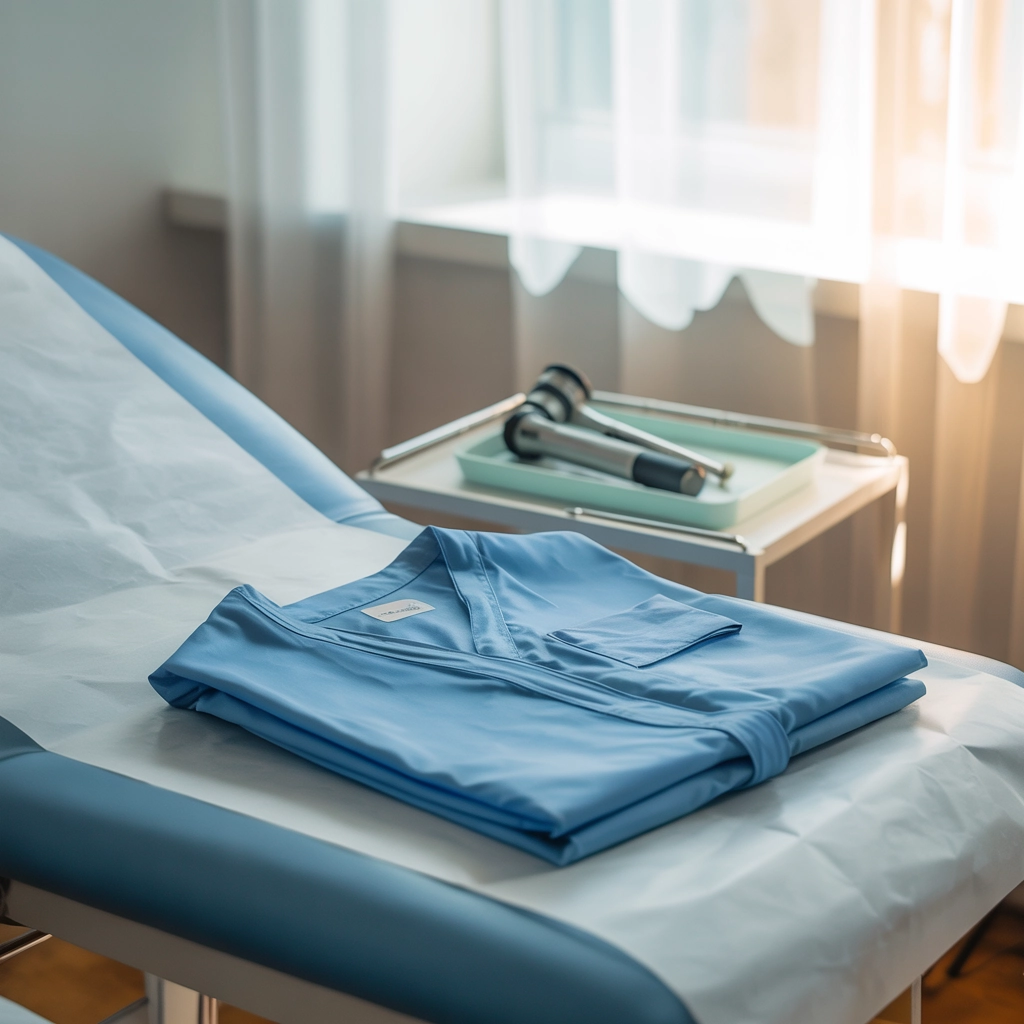
You’ll be provided with a gown to change into, but many patients ask about what to wear to the appointment. Comfortable, loose-fitting clothes that are easy to remove and put back on are ideal. You might want to skip jewelry and complicated outfits to save time.
The Examination: Step-by-Step
Step 1: Medical History and Initial Questions
Your appointment will begin with a review of your medical history and any specific concerns you have. This is your opportunity to point out any spots you’re worried about or changes you’ve noticed in your skin.
Step 2: Changing and Preparation
You’ll be shown to a private exam room and asked to change into a medical gown. Don’t worry – our team prioritizes your privacy and comfort throughout the entire process.
Step 3: The Systematic Examination
The dermatologist will systematically examine your skin from head to toe. Here’s what this includes:
- Scalp and face: Using a bright light and sometimes a special magnifying tool called a dermatoscope, the provider will carefully check your scalp (parting hair as needed), face, ears, and neck.
- Upper body: The exam continues to your chest, back, arms, hands, and fingernails.
- Lower body: The provider will check your abdomen, legs, feet, and toenails.
- Private areas: While skin cancer can occur anywhere on the body, including genitals, this part of the exam is optional. Your provider will ask for your consent and explain the importance of checking these areas. You can always decline examination of any body part.
During the exam, the dermatologist is looking for:
- Moles with irregular shapes, borders, or colors
- New growths or lesions
- Changes to existing moles
- Spots that itch, bleed, or don’t heal
- Any other unusual skin presentations
Step 4: Dermoscopy for Closer Evaluation
If the dermatologist identifies any concerning spots, they may examine them more closely with a dermatoscope, which is a specialized tool that combines a magnifying lens with a light source. This non-invasive device allows for detailed observation of skin structures not visible to the naked eye.
Step 5: Documentation and Discussion
Throughout the exam, the provider will document any findings. Many dermatology practices now use digital photography to track moles over time, making it easier to identify subtle changes during future visits.
The entire examination typically takes 15-20 minutes, depending on how many areas require closer inspection.
When Something Suspicious Is Found
If your provider identifies a suspicious spot, don’t panic. Many concerning areas turn out to be benign. Here’s what happens next:
Biopsies
If something looks potentially cancerous or requires further investigation, your dermatologist may recommend a biopsy. This quick procedure can often be performed right after your exam and involves:
- Numbing the area with a local anesthetic
- Taking a small sample of the suspicious tissue
- Sending the sample to a laboratory for analysis
- Getting results typically within 1-2 weeks
Different types of biopsies include:
- Shave biopsy: Removing a thin layer of skin using a surgical blade
- Punch biopsy: Using a circular tool to remove a small core of skin
- Excisional biopsy: Removing the entire lesion and a margin of surrounding skin
Your provider at Arizona Skin Institute will explain which type is most appropriate for your situation and what to expect during the procedure.
After Your Examination
Understanding Your Results
After your exam (and any biopsies), your dermatologist will discuss:
- What they found during the examination
- Any necessary follow-up procedures
- Recommendations for future screenings
- Personalized skin care advice
Follow-Up Care
Based on your risk factors and examination findings, your provider will recommend a schedule for future skin exams. This might be:
- Every 3-6 months for high-risk patients or those with a history of skin cancer
- Annually for moderate-risk patients
- Every 1-3 years for low-risk patients
Self-Examinations Between Appointments
Your provider will also teach you how to perform monthly self-examinations using the ABCDE method to evaluate moles:
- Asymmetry: One half doesn’t match the other
- Border: Irregular, ragged, or blurred edges
- Color: Varies from one area to another
- Diameter: Larger than a pencil eraser (6mm)
- Evolving: Changing in size, shape, color, or elevation
Learning to perform effective self-examinations is an essential complement to professional skin checks.
Common Questions and Concerns
“Is the exam uncomfortable or painful?”
The exam itself is painless – it’s simply a visual inspection. If a biopsy is needed, the area will be numbed first to minimize discomfort.
“I’m embarrassed about being undressed.”
We understand this concern completely. At Arizona Skin Institute, we prioritize your dignity and comfort. You’ll be properly draped throughout the exam, with only the area being examined exposed at any given time. Our team is professional and compassionate, focused entirely on your health.
“What about insurance coverage?”
Most insurance plans cover skin cancer screenings, especially if you have risk factors or a concerning spot. Our office staff can help verify your coverage before your appointment.
“How long does it take?”
A typical full-body skin exam takes about 15-20 minutes, though it may be longer if multiple areas need closer evaluation or if biopsies are performed.
“Do I really need to remove all my clothing?”
For the most thorough examination, yes. However, you can always request a partial examination if you’re uncomfortable with a complete check. Remember that skin cancer can occur anywhere on the body, even in places never exposed to the sun.
Who Should Get Regular Full-Body Skin Exams?
While everyone can benefit from periodic skin exams, they’re especially important if you:
- Have a personal or family history of skin cancer
- Have fair skin, light hair, or light eyes
- Have a history of excessive sun exposure or sunburns
- Use or have used tanning beds
- Have many moles (more than 50)
- Have atypical or dysplastic moles
- Are over 50 years old
- Live in a high-UV environment like Arizona
Taking the First Step
At Arizona Skin Institute, we understand that full-body skin exams might feel intimidating if you’ve never had one before. We strive to make every aspect of the experience comfortable, respectful, and thorough.
Remember that skin cancer is highly treatable when caught early. A brief examination today could quite literally save your life.
To schedule your full-body skin exam with our compassionate team, contact us today. Your skin deserves expert care, and we’re here to provide it.

RF Microneedling vs. Traditional Microneedling
If you've been researching ways to refresh your skin, you've probably stumbled across microneedling. But then you realize there are two types, traditional and RF (radiofrequency), and suddenly...

Why Everyone Is Talking About RF Microneedling
Walk into any coffee shop in Arizona or flip through your Instagram feed, and you'll probably hear someone gushing about RF microneedling. It's not just another fleeting skincare trend, this...

Botox Vs Dysport – Which Is Better?
If you've ever looked in the mirror and thought, "I just want to look like me, but, like, the well-rested version," you're not alone. And if you've been researching neuromodulators (fancy word for...
Microneedling Explained: Your 2026 Resource
Microneedling has become one of the most popular skin treatments for good reason: it's effective, versatile, and works for almost everyone. As we move into 2026, this treatment continues to evolve...

The Essential Guide to Dermal Fillers in 2025-2026
Dermal fillers have revolutionized aesthetic medicine, offering a way to restore youthful volume, smooth wrinkles, and enhance facial contours without surgery. As we move into 2026, the filler...

Your Complete Botox Guide for 2026
Botox has come a long way since its early days, and 2026 brings some exciting developments that make treatments more personalized, natural-looking, and effective than ever before. Whether you're...

Best Treatments for Neck Rejuvenation
Let's be honest – when it comes to aging, the neck is often the telltale sign that gives away our true age. While we diligently apply sunscreen and anti-aging creams to our faces, the neck area...
Schedule An Appointment
Surprise
Buckeye
