
If you’ve been researching ways to refresh your skin, you’ve probably stumbled across microneedling. But then you realize there are two types, traditional and RF (radiofrequency), and suddenly you’re down a Google rabbit hole trying to figure out which one is right for you.
Here’s the good news: both treatments are excellent options for rejuvenating your skin. The better news? Once you understand how they differ, choosing between them becomes way easier. Let’s break down the key differences so you can make the best decision for your skin goals.
How Traditional Microneedling Works
Traditional microneedling is pretty straightforward. A device with fine needles creates tiny, controlled punctures in your skin’s surface. Think of it like aerating your lawn, you’re creating little channels that trigger your body’s natural healing response.
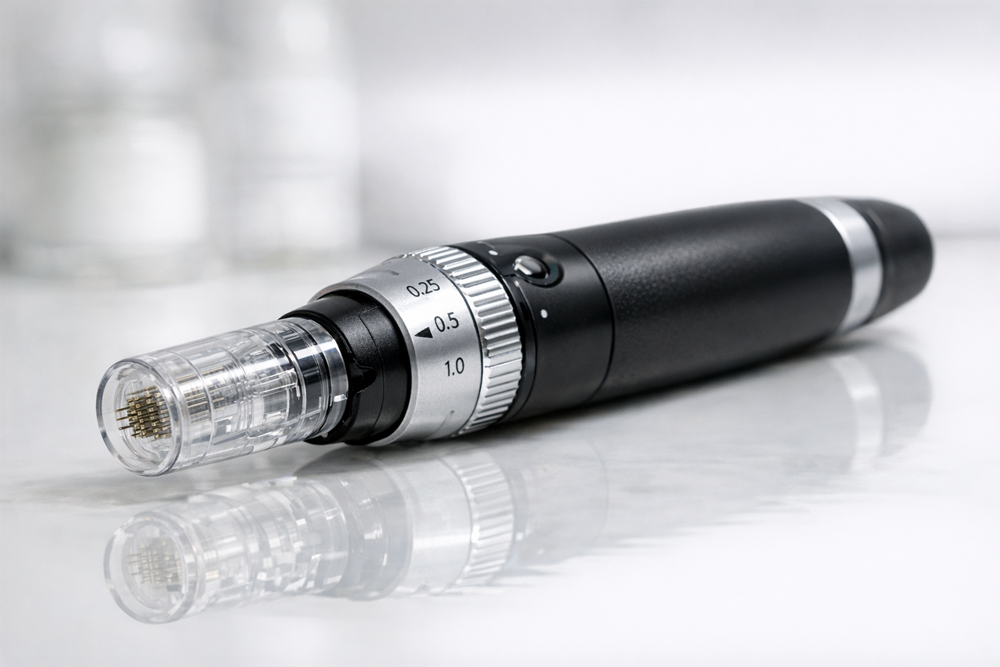
When your skin detects these micro-injuries, it kicks into repair mode and starts producing fresh collagen and elastin. This process smooths out texture, reduces the appearance of fine lines, and gives your skin a more even tone. Traditional microneedling typically reaches depths of up to 2mm, focusing primarily on the upper layers of your skin.
It’s effective for surface-level concerns like:
- Fine lines and mild wrinkles
- Minor texture issues
- Superficial sun damage (something we see a lot here in the Valley)
- Enlarged pores
- Mild scarring
How RF Microneedling Takes It Further
RF microneedling uses the same needle-puncture concept, but adds a game-changing element: radiofrequency energy. As the needles penetrate your skin, they deliver controlled heat deep into the dermal layers.
This heat does two powerful things. First, it causes existing collagen fibers to contract immediately, creating an instant tightening effect. Second, it ramps up your body’s collagen production far beyond what traditional microneedling can achieve.
The depth difference is significant. RF microneedling can reach 3.5 to 4mm deep, that’s nearly twice as deep as traditional microneedling. This matters because deeper skin damage (like advanced aging, significant sun damage, and stubborn scarring) happens in those lower layers where traditional microneedling just can’t reach.
The Results: What Each Treatment Does Best
Here’s where things get practical. Both treatments stimulate collagen, but they excel at different concerns.
Traditional microneedling shines for:
- Improving overall skin texture and tone
- Minimizing mild fine lines
- Reducing the appearance of shallow acne scars
- Evening out minor discoloration
- Refining enlarged pores
RF microneedling is your go-to for:
- Deeper wrinkles and pronounced lines
- Skin laxity and mild sagging (especially around the jawline and neck)
- Loss of elasticity and that “crepey” texture
- Moderate to severe acne scarring
- More advanced sun damage and photaging
If you’re dealing with Arizona’s intense sun exposure, and let’s be honest, most of us in Phoenix, Scottsdale, Surprise, and Buckeye are, you might be seeing some of those deeper concerns like textural changes and loss of firmness. That’s where RF microneedling’s deeper penetration really makes a difference.
Downtime and Recovery: What to Expect
Both treatments involve minimal downtime compared to more invasive procedures, but there are some differences in recovery.

Traditional microneedling typically causes redness and a slight sunburned feeling for about 24 to 48 hours. Most people are back to their normal routine within a couple of days. You might experience some light flaking as your skin renews itself.
RF microneedling involves slightly more recovery time because of the heat energy. Expect redness and possibly some swelling for about 3 to 5 days. Some patients describe it as looking like they got a bit too much sun (ironic, we know, given we’re trying to reverse sun damage). The extended downtime is because your skin is healing from both the needle punctures and the thermal effect in the deeper layers.
The good news? Neither treatment requires you to hide out for weeks. You’ll want to skip makeup for a day or two and be diligent about sun protection, but you won’t need to take a week off work.
Sessions, Cost, and Long-Term Value
Here’s something important to consider: while RF microneedling typically costs more per session, you’ll likely need fewer treatments to see your desired results.
Traditional microneedling usually requires 4 to 6 sessions spaced about 4 weeks apart to achieve noticeable improvement. You’ll see gradual changes over several months as your collagen builds.
RF microneedling often delivers visible results in just 1 to 3 sessions, with improvement continuing for 3 to 6 months as new collagen develops. The more dramatic and longer-lasting results mean that despite the higher upfront cost per session, RF microneedling can actually be more cost-effective in the long run.
Plus, RF microneedling’s results tend to last longer because the collagen remodeling happens at a deeper, more structural level.
Customization and Versatility
One advantage of RF microneedling is the level of customization available. Your provider can adjust both the needle depth and the intensity of the radiofrequency energy based on your specific skin type, concerns, and treatment area. This means the treatment can be precisely tailored to what your skin needs.
Traditional microneedling, while effective, offers less flexibility in customization. The depth can be adjusted, but you’re working with mechanical stimulation alone.
RF microneedling is also more versatile in terms of where it can be used. While both treatments work well on the face, RF microneedling is particularly effective for treating areas like the neck, chest, hands, and even stretch marks on the body, concerns that many of our Arizona patients come to us with after years in the sun.
Which Treatment Is Right for You?
The honest answer? It depends on your specific skin concerns and goals.
Consider traditional microneedling if:
- You’re primarily dealing with surface-level texture issues
- You have fine lines and mild discoloration
- You’re working with a tighter budget
- You prefer a gentler approach with minimal downtime
- Your skin concerns are relatively mild
Consider RF microneedling if:
- You’re seeing deeper wrinkles or sagging skin
- You want to address loss of elasticity and firmness
- You have moderate to severe acne scarring
- You’re dealing with advanced sun damage (hello, Arizona life)
- You want more dramatic results in fewer sessions
- You’re okay with a slightly longer recovery period
Making Your Decision
At the end of the day, both traditional and RF microneedling are fantastic treatments that can significantly improve your skin. The “better” option truly depends on what you’re trying to achieve.
Living in the Phoenix area means our skin takes a beating from the sun, even when we’re diligent about protection. Whether you’re noticing surface texture changes or deeper structural concerns like sagging or pronounced wrinkles, there’s a microneedling option that can help you reach your skin goals.
The best way to determine which treatment is right for you is to sit down with a skincare professional who can evaluate your skin, discuss your concerns, and create a personalized treatment plan. At Arizona Skin Institute, we take the time to understand your unique needs and recommend the approach that will give you the best results.
Ready to find out which microneedling treatment is your perfect match? Book a consultation with our team, and let’s create a plan to help you achieve the healthy, refreshed skin you’re looking for. We’re here to guide you every step of the way.
This information is for educational purposes only and does not constitute medical advice. Individual results may vary. Always consult with a qualified healthcare provider to determine if microneedling is right for you.

Top Mistakes People Make After Fillers
Getting dermal fillers can be an exciting step toward achieving your aesthetic goals, but what happens after you leave our office is just as important as the treatment itself. Unfortunately, many...

Advancements in Non-Invasive Body Contouring
The landscape of body contouring has transformed dramatically in recent years, with Arizona leading the charge in offering cutting-edge, non-invasive technologies that deliver remarkable results...

Stress & Your Skin
How Lifestyle, Weather, and Environment Affect Flare-Ups Ever notice how your skin seems to break out right before a big presentation or how your eczema flares up during particularly stressful...

Seasonal Allergies & Your Skin
If you think Arizona's desert climate means fewer allergy problems, think again. Our unique desert environment creates some of the most challenging seasonal allergy conditions in the country, and...

What to Expect with a Full-Body Skin Exam
Why Regular Full-Body Skin Exams Are Essential in Arizona Living in Arizona means enjoying abundant sunshine year-round. While our sunny climate offers many benefits, it also puts us at higher risk...
Melasma in Arizona: Tips and Best Practices
Living in Arizona means enjoying abundant sunshine almost year-round, but this desert blessing comes with unique skin challenges. Among these, melasma stands out as a particularly frustrating...

Skincare Routines for Teens, Adults, and Seniors
At Arizona Skin Institute, we understand that skincare isn't one-size-fits-all. Your skin's needs evolve dramatically throughout your life, requiring different approaches and ingredients at each...
Schedule An Appointment
Surprise
Buckeye
