
Weight loss is a journey of transformation, often marked by increased energy, improved health markers, and a newfound sense of confidence. In recent years, the rise of GLP-1 receptor agonists: medications like Ozempic, Wegovy, and Mounjaro: has helped thousands of individuals achieve significant weight loss goals that once felt out of reach.
However, as the body changes, the face often follows suit. You may have heard the term “Ozempic Face” circulating in the news or on social media. While the name sounds a bit clinical and perhaps a little daunting, the reality behind it is quite simple and, more importantly, treatable.
At Arizona Skin Institute, we believe that your outward appearance should reflect the vibrant, healthy person you feel like on the inside. If you’ve noticed your face looking a bit more tired or hollow after your weight loss success, you aren’t alone: and you don’t have to just “live with it.”
What Exactly is “Ozempic Face”?
First, let’s clear the air: “Ozempic Face” is not a medical side effect of the medication itself. The medication isn’t attacking your facial tissues. Instead, the term describes the natural physical changes that occur when someone loses a significant amount of weight in a relatively short period.
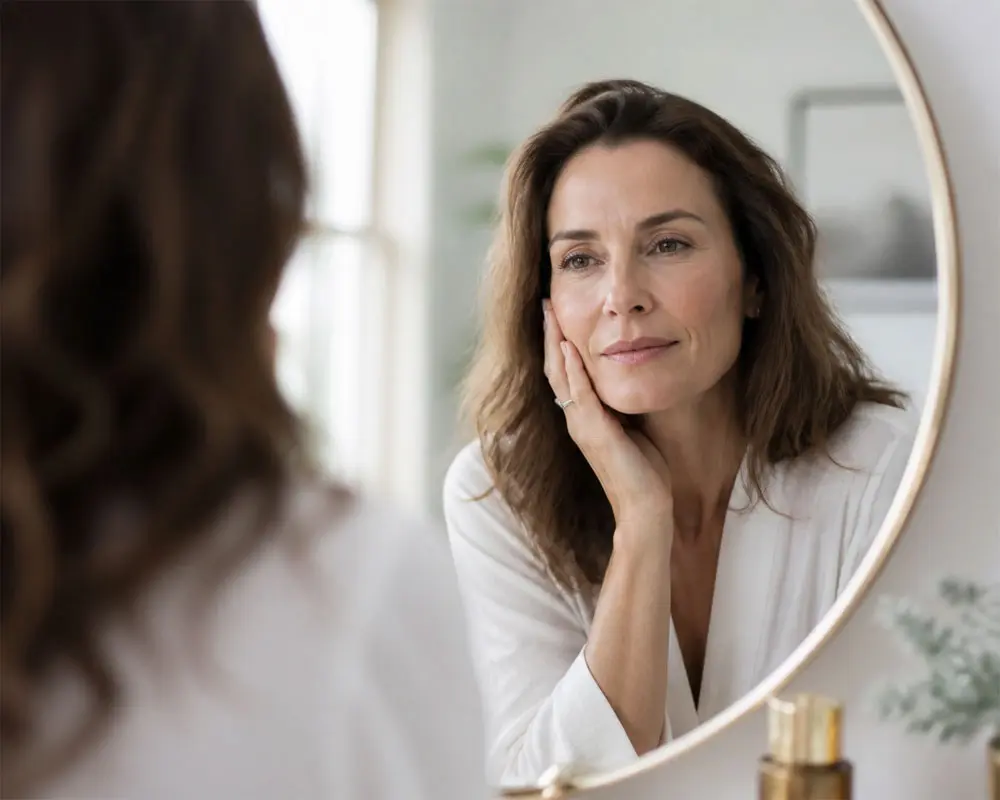
Our faces rely on pockets of subcutaneous fat to provide structure, softness, and that youthful “bounce.” This fat acts as a support system for our skin. When we lose weight rapidly, the body pulls fat from everywhere, including the face. Because facial fat is often what keeps us looking hydrated and rested, losing it can lead to a more “sunken” or “hollow” appearance, particularly around the cheeks, temples, and under the eyes.
Why Does Weight Loss Affect the Face So Visibly?
To understand how to fix the loss of volume, it helps to understand why it happened in the first place. There are three main factors at play:
1. The Loss of Subcutaneous Fat
Think of your skin like a silk cloth draped over a round cushion. The cushion represents the fat pads in your cheeks and jawline. If you shrink the cushion, the cloth: your skin: no longer has the same support. It may begin to fold or sag. In the medical world, we call this “volume loss,” and it’s one of the primary markers of aging, which rapid weight loss can sometimes accelerate.
2. Skin Elasticity and the “Snap Back” Factor
Our skin contains collagen and elastin, the proteins responsible for keeping it firm and stretchy. When we lose weight slowly, our skin often has a better chance of “snapping back” to fit our new contours. However, GLP-1 medications often lead to rapid weight loss. If the weight drops faster than the skin can produce new collagen to tighten up, you may notice more fine lines or a slight “deflated” look.
3. The Natural Aging Process
Many patients utilizing these medications are in their 40s, 50s, or 60s: a time when our natural collagen production has already begun to slow down. When you combine natural age-related volume loss with the rapid fat loss from a successful diet or medication, the results are more pronounced.
Reclaiming Your Glow: How We Restore Your Volume
The good news is that dermatology has evolved incredibly over the last decade. We no longer have to rely on invasive surgeries to “fix” a hollowed appearance. At Arizona Skin Institute, we specialize in medical dermatology and cosmetic treatments that subtly and naturally restore what was lost.
Our goal isn’t to change how you look; it’s to help you look like yourself again: just a more rested, refreshed version.
Sculptra: The “Long-Game” Collagen Builder
One of our favorite tools for treating volume loss after weight loss is Sculptra. Unlike traditional fillers that provide instant “plumping,” Sculptra is a poly-L-lactic acid (PLLA) biostimulator. It works deep within the dermis to help replace lost collagen.
Because it stimulates your body’s own natural processes, the results appear gradually over several months. This is perfect for patients who want a discreet transformation. Over time, Sculptra fills in the hollows of the cheeks and temples, providing a soft, natural lift that can last up to two years.
Dermal Fillers for Immediate Refinement
If you are looking for more immediate results, hyaluronic acid (HA) fillers like Juvéderm or Restylane are excellent options. These are particularly effective for:
- Filling the “Tear Troughs”: Smoothing out the hollows under the eyes to remove a tired look.
- Defining the Jawline: Restoring the structure that may have softened as skin lost its support.
- Cheek Augmentation: Lifting the mid-face to restore that youthful “apple” to the cheeks.
Because HA is a substance naturally found in your body, these fillers are highly biocompatible and provide a soft, hydrated look.
Skin Tightening and Surface Health
Sometimes, the issue isn’t just volume; it’s the texture and “crepiness” of the skin itself. For patients experiencing this, we often recommend treatments that focus on the surface level.
Microneedling or specialized laser treatments can help trigger the body’s healing response, thickening the skin and improving its overall “glow.” We often guide our patients on a skincare routine for clear and glowing skin to maintain their results at home.
A Compassionate Approach to Your Transformation
At Arizona Skin Institute, we recognize that the journey to health is emotional. It can be frustrating to finally hit your goal weight only to feel like your mirror is telling a different story.
When you visit us, we don’t just see a “case of volume loss.” We see a person who has worked hard to improve their health and deserves to feel beautiful. We take a “less is more” approach, ensuring that any treatment we provide enhances your natural features rather than masking them. We want your friends to say, “You look amazing and rested,” not “What did you have done?”
Practical Tips for Your Weight Loss Journey
If you are currently on a GLP-1 medication or starting a significant weight loss program, there are a few things you can do to support your skin health:
- Prioritize Protein: Your skin and muscles need amino acids to maintain their integrity.
- Stay Hydrated: Dehydrated skin looks thinner and shows more wrinkles.
- Sun Protection is Key: UV damage breaks down the very collagen you are trying to preserve.
- Consult Early: You don’t have to wait until you’ve reached your final goal weight to talk to a dermatologist. Starting collagen-stimulating treatments early can often help the skin transition more smoothly as you lose weight.
Moving Forward with Confidence
Losing weight is a massive achievement for your heart, your joints, and your longevity. The changes in your face are simply a sign of that success: a “side effect” of a smaller, healthier body.
If you’re concerned about looking older or more tired than you feel, let’s talk. Whether it’s through a customized skincare routine or a tailored plan involving Sculptra and fillers, we are here to help you cross the finish line of your transformation with confidence.
You’ve done the hard work of losing the weight. Let us do the work of making sure you love what you see in the mirror.
Are you ready to restore your natural glow?
Contact Arizona Skin Institute today to schedule a consultation. We’ll sit down together, listen to your concerns, and create a plan that helps you look and feel your absolute best. Let’s celebrate your health journey by bringing back your natural volume and radiance.

7 Types of Skin Cancer Treatments in Arizona Skin-Scottsdale, AZ
Arizona Skin Dermatology is a leading provider of treatments for patients with basal cell carcinoma, squamous cell carcinoma, precancerous actinic keratosis, and other skin problems. If your...

How to Spot Skin Cancer
Skin cancer is the most common type of cancer in the United States. Anyone can get it regardless of skin color. Estimates of skin cancer prevalence conducted by Stern, R.S. in 2007 show that one out...

Skin Cancer Risk Reducing Tips
Exposure to the sun is known for its vitamin D benefits. Research suggests that brief exposure of the face, hands, and arms of about 15 minutes a day three times a week is sufficient. However,...
Are Facial Cleansing Tools Necessary and Safe?
When it comes to skincare, there's a lot to cover, from face serums to scrubs, and that's just the goods! If you're still learning about the many techniques to get a flawless complexion, you may...
Different Types of Skin Cancer
The skin is made up of many different types of cells, many of which are constantly moving. As round basal cells beneath the surface rise to replace dead, flaking squamous cells on the surface, they...
Shingles: Symptoms, Causes, and Treatment
Shingle is a type of itchy rash caused by the reactivation of the varicella-zoster virus, which is also responsible for chickenpox. Dr. Jay Mehta and his team of dermatologists regularly treat...
Common Nail Disorder Conditions and Treatments
Nail disorders are a broad category of illnesses that impair the look of one's fingernails and toes. Your nails can disclose a lot about your health. Infections produced by bacteria, fungi, or...
Schedule An Appointment
Surprise
Buckeye
